Skip to product information
1 of 1

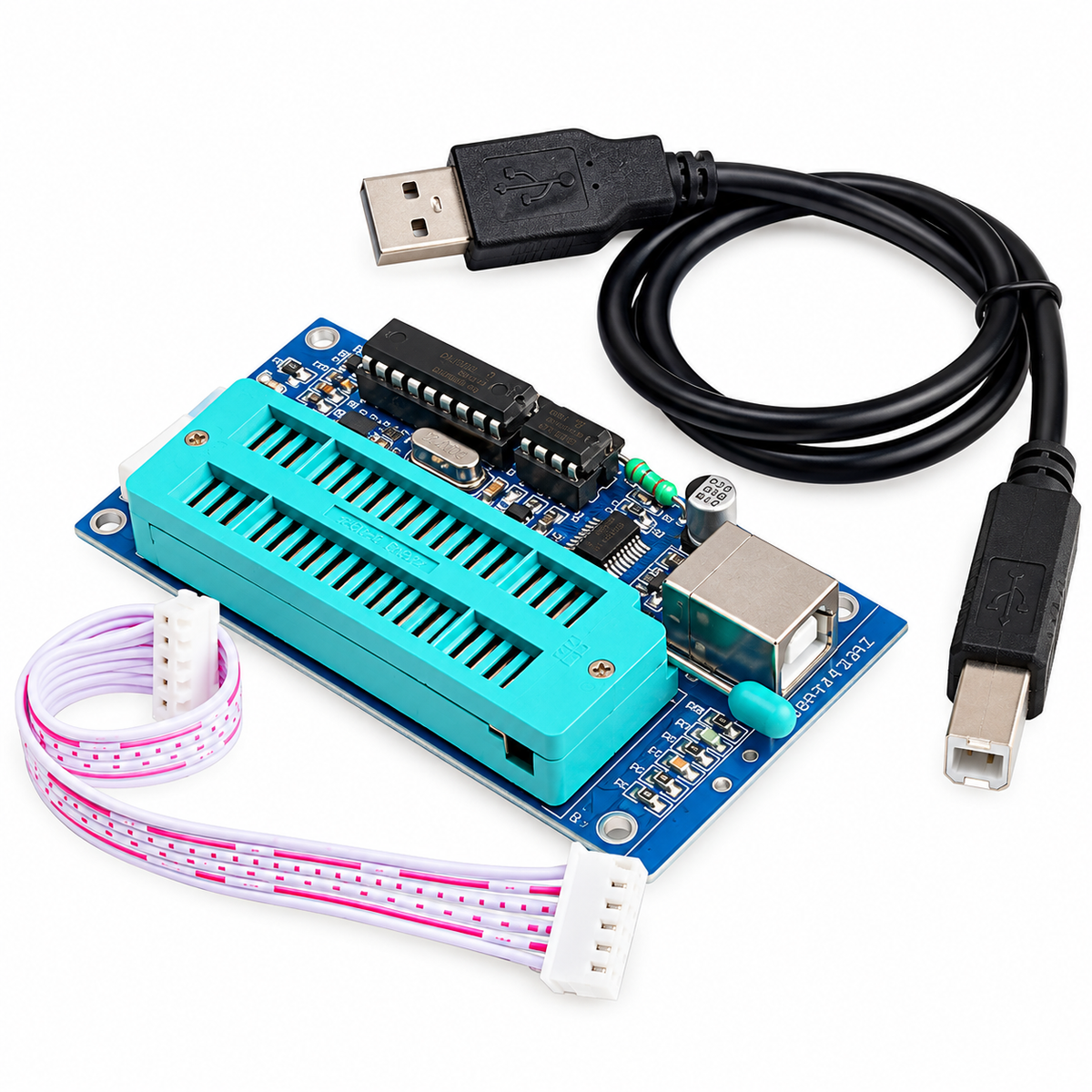
K150 ICSP USB PIC Automatic Develop Microcontroller Programmer

K150 ICSP USB PIC Automatic Develop Microcontroller Programmer

Regular price Dhs. 20.00
Regular price Dhs. 50.00 Sale price Dhs. 20.00
Sold out
Tax included.

The K150 ICSP USB PIC Automatic Development Microcontroller Programmer is a USB-based programming tool designed for programming and developing compatible PIC microcontrollers. It connects to a computer through a USB...

Availability: Low stock: 2 left

SKU: OPX-ELC-0233
Vendor: OPPONIX
Category: Unknown Type

Shipping & Returns

Free shipping and returns available on all orders!

We ship all US domestic orders within 5-10 business days

Care Instructions

We advise routinely dusting your items with a gentle cleanser to preserve its look. Periodically, it may need to be softly wet with a mild detergent solution.
View full product details

The K150 ICSP USB PIC Automatic Development Microcontroller Programmer is a USB-based programming tool designed for programming and developing compatible PIC microcontrollers. It connects to a computer through a USB interface and supports in-circuit serial programming (ICSP) for convenient microcontroller programming.

Suitable for electronics engineers, students, hobbyists, and embedded systems developers, the K150 programmer is useful for prototyping, firmware development, microcontroller testing, and educational projects.

Key Features

  • USB Interface: Connects to a computer for convenient programming.
  • ICSP Support: Enables in-circuit serial programming for compatible PIC microcontrollers.
  • PIC Microcontroller Programming: Designed for supported PIC devices.
  • Compact Design: Suitable for electronics workbenches and development environments.
  • Embedded Development: Useful for firmware uploading, testing, and prototyping.
  • Educational Applications: Ideal for learning PIC microcontroller programming and embedded systems.

Applications

  • PIC microcontroller development
  • Embedded systems programming
  • Electronics prototyping and testing
  • Microcontroller-based DIY projects
  • Engineering and technical education
  • Firmware development and debugging workflows